


The Tour de France is cycling's biggest product showcase, but it is also one of the easiest places to misread a new bike. A frame beneath a team leader may be a finished retail model, an unnamed prototype or a development part that will change before launch. When a brand claims a saving of several watts, that number cannot simply be placed beside a rival's result: test speed, yaw angle, wheels and measurement protocol may all differ.
We have therefore reviewed the nine machines making their Tour debut in 2026 with one rule: keep observed features separate from manufacturers' claims. The point is not to manufacture a ranking from incompatible numbers. It is to understand where elite road bikes are heading, and which changes might matter to riders if and when the production versions reach shops.
The nine new bikes at a glance
| Bike | Team observed | Headline change | Status at the Tour start |
|---|---|---|---|
| Bianchi Specialissima RC | Bahrain Victorious | Lower weight with more aero shaping | New model presented |
| Cannondale SuperSix EVO LAB71 Gen 5 | EF Education-EasyPost | Light frame and clearance for up to 32mm tyres | New model presented |
| Cube Litening Aero prototype | TotalEnergies | Unreleased aero platform | Unannounced prototype |
| Giant Propel Advanced SL | Jayco AlUla | Lighter system and revised integration | New generation |
| LOOK 795 Blade RS 3 | Cofidis | Lower system weight | New model presented |
| Orbea Orca Aero | Lotto-Intermarché | Aero development and up to 37mm clearance | New generation |
| Specialized S-Works Tarmac SL9 | Red Bull-Bora-Hansgrohe, Soudal Quick-Step | More efficient all-round successor to the SL8 | New model presented |
| Unnamed Van Rysel | Decathlon CMA CGM | Apparent blend of the RCR and RCR-F ideas | Prototype |
| Wilier Filante SLR ID2 | Groupama-FDJ United | Aero platform with lower weight and 34mm clearance | New model presented |
Bianchi Specialissima RC: the climber learns more about aero
The new Specialissima RC used by Bahrain Victorious illustrates how quickly the boundary between climbing and aero bikes is disappearing. Bianchi claims a 750g frame and a 16W saving at 50kph over the previous generation. Those are the brand's figures from its own protocol, not an independent comparison with the other bikes here.
The direction is clear. A lightweight race bike must also conserve energy in valleys and on rolling roads. For customers, that convergence may mean fewer compromises, although deeper integration can make fitting and maintenance more involved.
Cannondale SuperSix EVO LAB71 Gen 5: a measured evolution
EF Education-EasyPost's fifth-generation SuperSix EVO LAB71 stays faithful to the all-round race-bike formula. Cannondale claims 755g for a painted size-56 frame and 378g for the fork. Clearance for tyres up to 32mm may be more revealing still: even at the highest level, comfort, grip and rolling efficiency are no longer treated as the enemies of speed.
The fastest width will still depend on rim, pressure, surface and rider. This clearance chiefly shows that a modern race frame is expected to offer more setup options.
Cube Litening Aero: the most mysterious prototype
The Cube under TotalEnergies riders is the bike about which we need to be most cautious. Its profile and integration details point towards an evolution of the Litening Aero concept, but Cube had not confirmed its name or specifications when it was first observed.
It is reasonable to call it an aero prototype, but not to assign a weight, price, launch date or performance gain. The Tour is its laboratory before the retail specification is frozen.
Giant Propel Advanced SL: 355g removed from the system
The latest Propel Advanced SL seen with Jayco AlUla follows another important trend: optimise the whole system rather than discussing the frame in isolation. Giant claims a 355g reduction for the complete system and an aerodynamic improvement equivalent to 18.4W at 40kph in its testing. The bike now accepts tyres up to 32mm.
That 18.4W is not directly comparable with Bianchi's 16W because methods may differ. What matters is Giant pursuing lower weight, wider tyres and cleaner integration at the same time.
LOOK 795 Blade RS 3: weight reduction takes priority
Cofidis has the new 795 Blade RS 3. LOOK claims an 890g frame in size medium, a 160g reduction across the system and complete-bike builds starting at 6.9kg without pedals. The last detail matters: a figure without pedals cannot be directly compared with a ready-to-race bike carrying bottle cages, a transponder or a head unit.
The RS3 aims to give the 795 Blade better balance on hilly stages without abandoning its aero identity. The production bike will need to confirm that benefit in fit, ride and serviceability.
Orbea Orca Aero: clearance for up to 37mm tyres
Lotto's new Orca Aero pushes wide-tyre compatibility furthest. Orbea claims a 900g frame, a 410g fork and a total 21W saving across its comparison scenario, including 14W less aerodynamic drag at 50kph. Tyre clearance reaches 37mm.
That does not mean the peloton will race on 37mm tyres tomorrow. It opens the platform to broken surfaces and broader fast-road use: aero design must now work with tyres selected for real roads.
Specialized Tarmac SL9: four watts, but fewer compromises
The S-Works Tarmac SL9 appears with Red Bull-Bora-Hansgrohe and Soudal Quick-Step. Specialized claims a 687g frame and a 4W advantage over the SL8 at 45kph. The figure looks modest beside more dramatic launch claims, but that is not necessarily a weakness: the SL8 already started from a highly developed platform.
The important question is how that progress interacts with mass and handling. Rider position, wheels and tyres can outweigh a few frame watts in many scenarios.
Van Rysel: a prototype blurring the RCR and RCR-F families
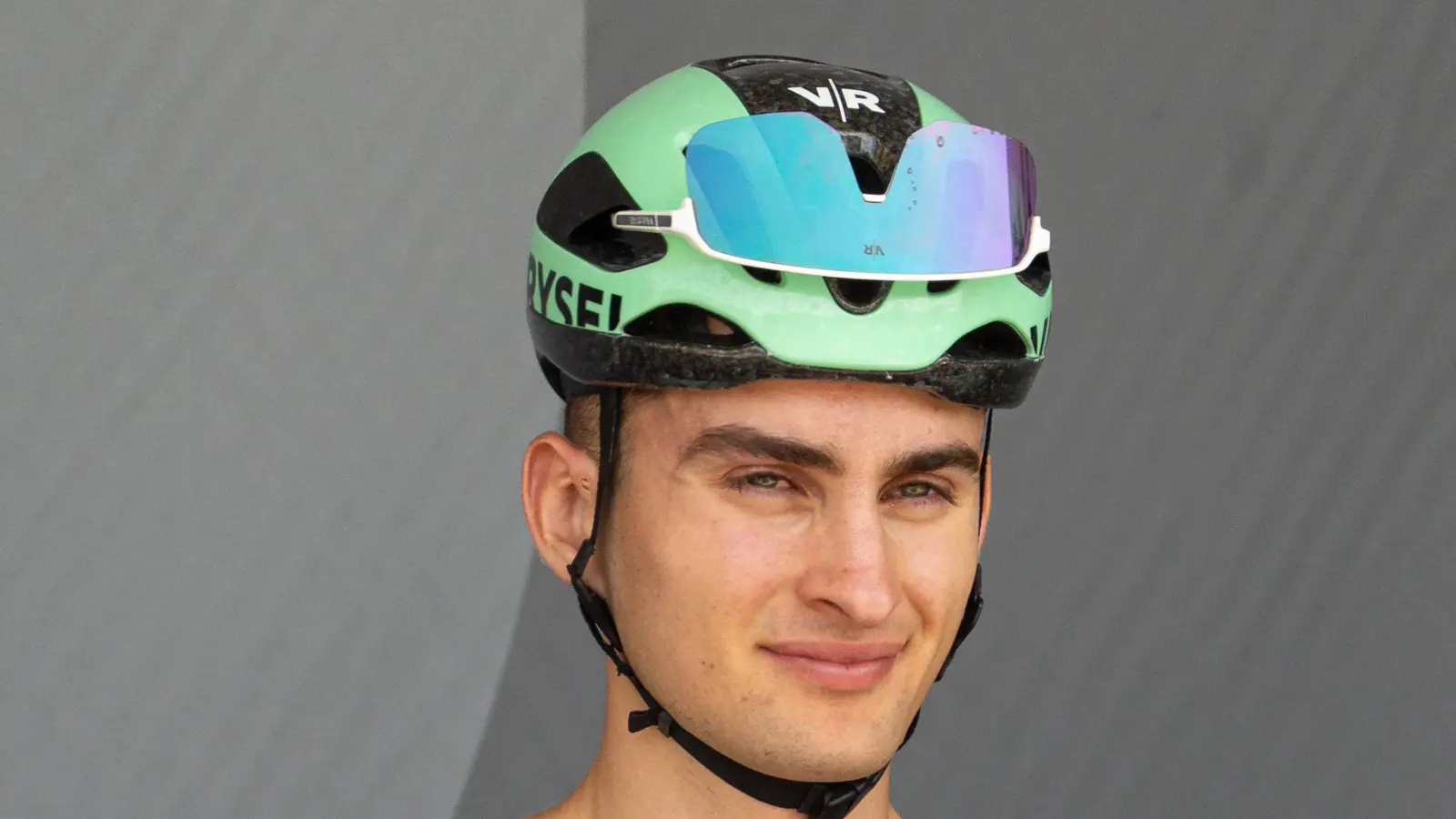
The officially unnamed bike used by several Decathlon CMA CGM riders combines a visually deep front end with a much slimmer rear triangle. It appears to explore common ground between the lighter RCR and the aero RCR-F, but Van Rysel has not confirmed that interpretation.
Final name, weight, price and launch date remain unknown. For now, its apparent intent is most interesting: cover both roles with one frame, an idea examined later in our series.
Wilier Filante SLR ID2: a broader brief for the Filante
Groupama-FDJ United is racing the Wilier Filante SLR ID2. Wilier claims 860g for the frame, with a tolerance of plus or minus two per cent, 380g for the fork and clearance for tyres up to 34mm. Once again, the available tyre width is almost as informative as frame mass.
The Filante remains an aero race bike, but it aims to cover more stages and surfaces. Fast bikes are becoming less restrictive in where and how they can be ridden.
What these bikes really change for buyers
Three themes connect them: “aero” and “climbing” categories are merging; 30 to 32mm tyres are normal in competition; and frame, fork, cockpit, wheels and tyres increasingly develop as one system.
None of this makes a recently purchased bike obsolete. A wind-tunnel gain is not a guarantee of more speed with your position, on your roads and with your wheels. Before buying, assess geometry, actual clearance with your rim-and-tyre combination, access to proprietary integration parts and complete-build weight. The Tour can show the industry's direction; it cannot replace a test ride in the correct size or a comparison on equivalent equipment.
Sources
- TOUR Magazin — bikes making their Tour debut in 2026
- BikeRadar — first look at the unreleased Van Rysel ridden by Paul Seixas
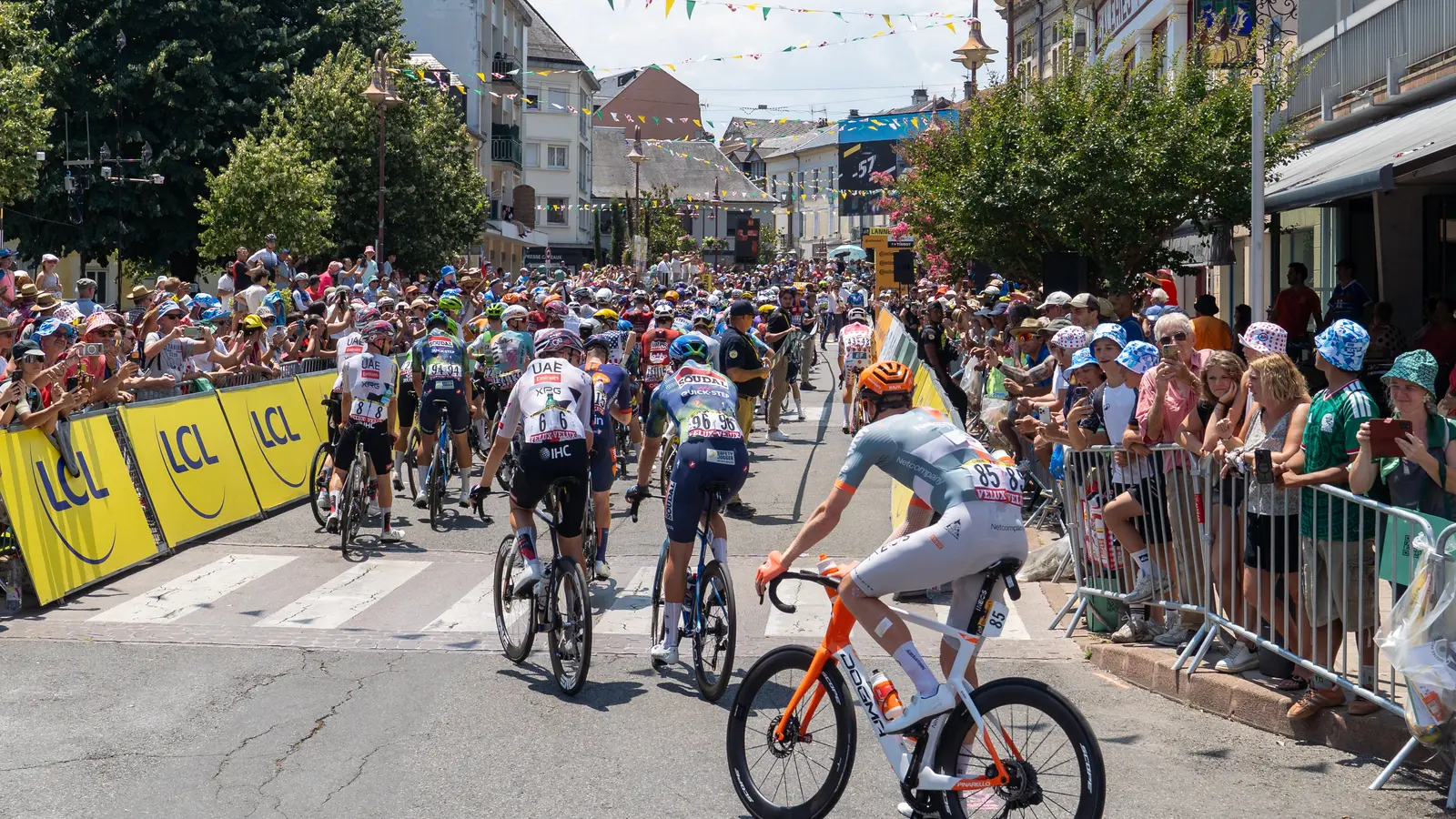
Cover photo: “Start of Stage 5 of the 2026 Tour de France”, Hugo LUC, via Wikimedia Commons, licensed under CC BY-SA 4.0. The image has been cropped and resized.

 France (fr)
 Belgique (fr)
 Canada (fr)
 Deutschland (de)
 United Kingdom (en)
 España (es)
 Nederland (nl)
 Italia (it)
 Suisse (fr)
